
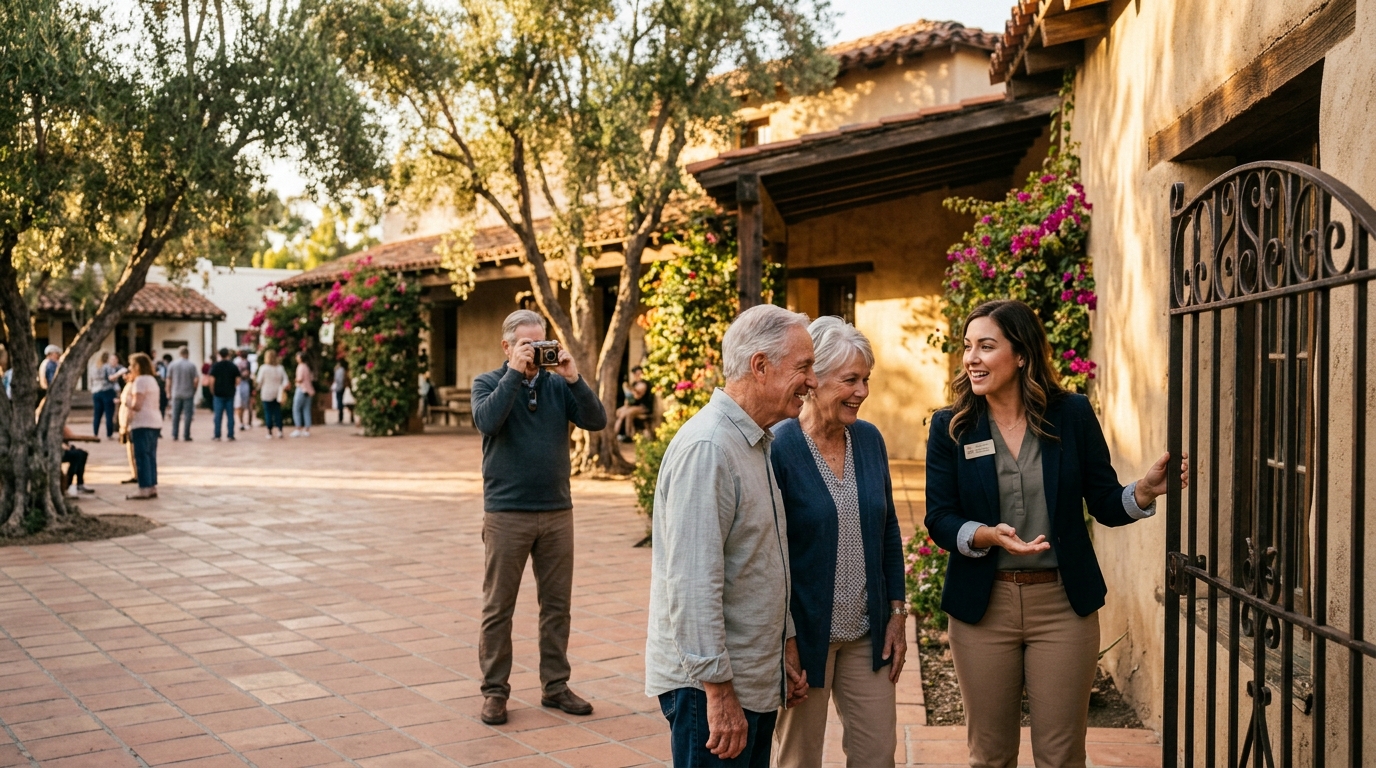
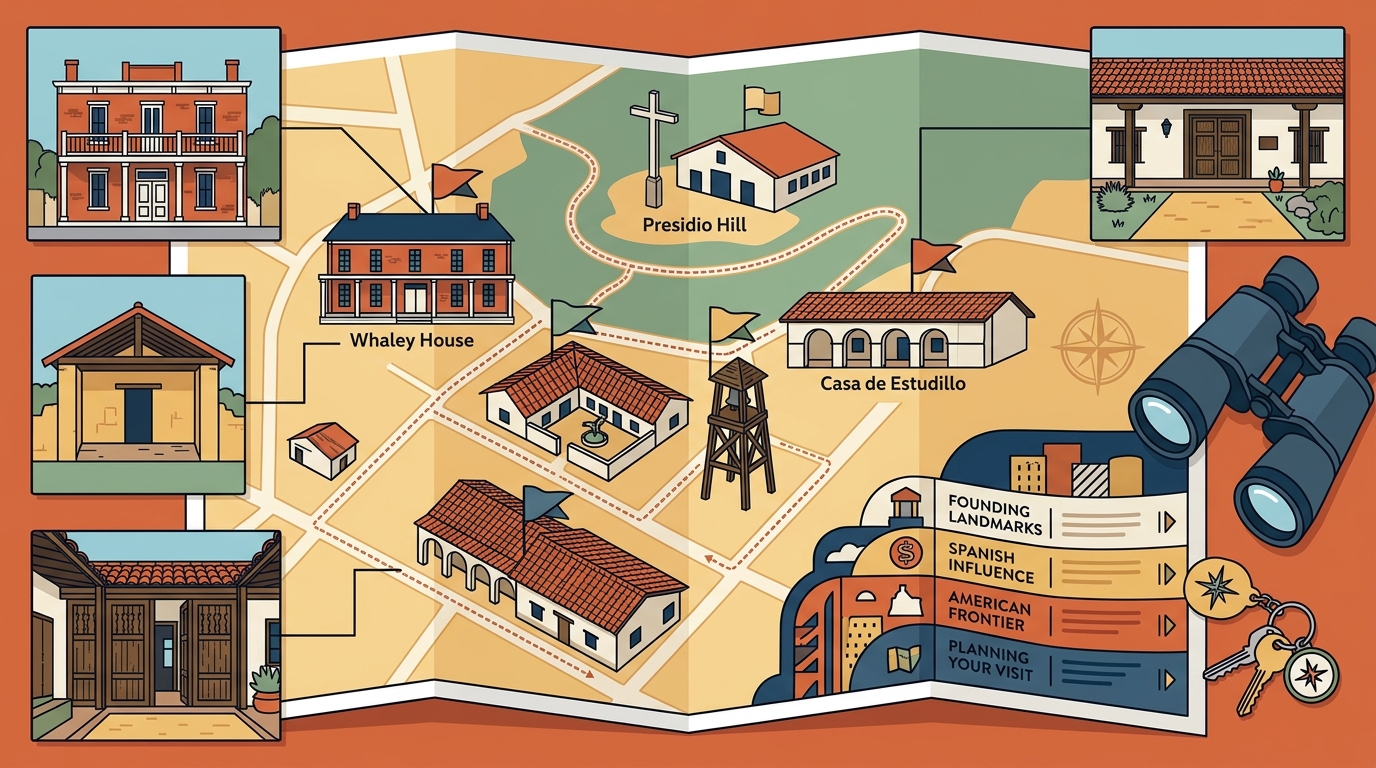
An Old Town San Diego walking tour covers the city's founding landmarks, including the Whaley House, Presidio Hill, and Casa de Estudillo. These sites illustrate the transition from Spanish colonial settlement to American frontier town. This guide details the specific historic locations you will encounter, the architectural styles defining the district, and how to plan your visit with local expertise.
The Whaley House
The Whaley House is the oldest commercial building in San Diego, constructed in 1849. It stands on the site of the original Spanish Presidio and serves as the district's most famous landmark. The structure is a two-story adobe that has witnessed the city's transformation from a small military outpost to a bustling port town.
Historical Significance
Originally built as a residence for Captain James Whaley, the house later became a general store and a saloon. It is deeply embedded in the local folklore of the American West. Visitors often note the building's thick adobe walls, which provide natural insulation against the coastal climate. The house remains a central point of interest for any historical exploration of the area.
Visitor Experience
Walking tours frequently stop here to discuss the architectural evolution of the building. The interior features period furnishings that reflect the lifestyle of the mid-19th century. It is a tangible connection to the era when San Diego was a remote outpost on the edge of the American frontier.
Presidio Hill Museum
Presidio Hill is the highest point in the original Spanish Presidio of San Diego. The museum located here preserves the history of the military garrison that established the city in 1769. It offers a panoramic view of the bay and the surrounding neighborhoods, providing context for the strategic placement of the original settlement.
The Spanish Military Presence
The Presidio was the heart of Spanish colonial power in the region. The museum displays artifacts and documents related to the soldiers and missionaries who founded the community. Understanding the Presidio is essential for grasping the origins of San Diego's urban layout. The site represents the first permanent European settlement in California.
Archaeological Insights
Excavations on the hill have revealed foundations of original structures and artifacts from the colonial period. These findings help historians reconstruct the daily life of the early inhabitants. The museum serves as an educational hub, offering insights into the complex relationship between Spanish colonizers and the indigenous Kumeyaay people.
Casa de Estudillo
Casa de Estudillo is the oldest house in San Diego, dating back to 1771. It was built by Juan José Estudillo, a prominent figure in the early Mexican period of the city's history. The adobe structure is a prime example of early Spanish colonial architecture in the region. It stands as a testament to the resilience of the early settlers.
Architectural Features
Cultural Legacy
Juan José Estudillo was a key political and military leader in the Mexican era. His legacy is intertwined with the development of San Diego as a civic center. The house serves as a reminder of the influential families who shaped the city's early identity. It is a significant stop for those interested in the genealogical and political history of the area.
Robinson Rose House
The Robinson Rose House is a historic adobe located in the heart of Old Town. It represents the architectural transition from the Spanish colonial period to the Mexican era. The house is known for its distinctive adobe construction and its role in the community's social history. It provides a glimpse into the domestic life of the 19th century.
Domestic Life in the 19th Century
The house offers insights into the daily routines of the families who lived there. The layout includes a central courtyard, a common feature in Spanish-influenced architecture. This design provided a private outdoor space for family activities. The preservation of the house allows visitors to imagine the sounds and smells of life in a bygone era.
Restoration Efforts
Like many structures in the district, the Robinson Rose House has benefited from dedicated preservation efforts. These projects aim to maintain the original materials and techniques used in its construction. The house serves as an educational resource, demonstrating the craftsmanship of early builders. It is a quiet but significant part of the Old Town landscape.
Mason Street School
The Mason Street School is a historic one-room schoolhouse that represents the early educational system in San Diego. Built in the late 19th century, it served as a community center for local children. The building is a simple wooden structure that reflects the practical needs of the time. It stands as a reminder of the importance of education in the developing town.
Early Education in San Diego
Before the establishment of modern public schools, one-room schoolhouses like this one were the primary means of education. Teachers often taught multiple grades simultaneously in a single classroom. The schoolhouse was a focal point for community gatherings and social events. It played a crucial role in shaping the next generation of San Diegans.
Preservation and Use
The Mason Street School has been preserved to maintain its historical character. It often serves as a venue for cultural events and educational programs. The building's simple design contrasts with the more elaborate adobes in the district. It provides a balanced perspective on the diverse architectural styles found in Old Town.
Heritage Park
Heritage Park is a green space located in the center of Old Town San Diego. It serves as a gathering place for residents and visitors alike. The park features a monument to the founding of the city and provides a peaceful retreat from the bustling streets. It is a key location for community events and celebrations.
Community Gathering Space
The park is often the site of festivals, markets, and cultural performances. It offers a place for visitors to rest and reflect on the history of the area. The green space provides a contrast to the historic buildings surrounding it. It is a vital part of the district's social fabric, connecting the past with the present.
Landscaping and Design
Adobe Homes and Architecture
Adobe homes are the defining architectural feature of Old Town San Diego. Adobe is a building material made from earth, sand, and water, dried in the sun. These structures are known for their thermal mass, which keeps interiors cool in summer and warm in winter. The adobe style is a direct legacy of the Spanish colonial period.
Construction Techniques
Traditional adobe construction involves mixing local soil with straw and water to create bricks or walls. The walls are thick, often over a foot wide, providing excellent insulation. The roofs are typically flat, supported by wooden beams. This technique was well-suited to the local climate and available materials. It represents a sustainable building method that has stood the test of time.
Architectural Styles
Tour Format Comparison
| Tour Type | Duration | Focus | Best For |
|---|---|---|---|
| Self-Guided Walking | 2-3 Hours | Major Landmarks | Independent Travelers |
| Guided Walking Tour | 1.5-2 Hours | History and Stories | First-Time Visitors |
| Specialized History Tour | 3-4 Hours | Deep Historical Context | History Enthusiasts |
Choosing the right tour format depends on your interests and available time. A guided tour provides expert narration and context, while a self-guided tour offers flexibility. Consider your physical comfort and the specific sites you wish to visit when planning your itinerary.
Key Takeaways
- The Whaley House is the oldest commercial building in San Diego, built in 1849.
- Presidio Hill was the site of the original Spanish military garrison.
- Casa de Estudillo is the oldest house in the city, dating to 1771.
- Adobe architecture is the defining feature of the Old Town district.
- Heritage Park serves as a central community gathering space.
- The Mason Street School represents the early educational system.
- Guided tours provide deeper historical context than self-guided walks.
- Old Town is a blend of Spanish, Mexican, and American historical influences.
Frequently Asked Questions
What is the oldest building in Old Town San Diego?
Casa de Estudillo is the oldest house in San Diego, built in 1771. The Whaley House is the oldest commercial building, constructed in 1849.
Is Old Town San Diego walkable?
Yes, Old Town is a compact district that is easily explored on foot. The streets are pedestrian-friendly, and the major landmarks are located within a short walking distance of each other.
What should I wear for a walking tour?
Comfortable walking shoes are essential. The terrain is generally flat, but you will be on your feet for an extended period. Dress in layers, as the weather can change quickly near the coast.
Are the historic sites open to the public?
Many of the historic sites in Old Town are open to the public, but hours and admission fees vary. It is advisable to check specific site schedules before your visit. Some buildings are private residences and cannot be entered.
How long does a typical Old Town walking tour take?
A standard guided walking tour takes approximately 1.5 to 2 hours. Specialized tours that cover more ground or provide deeper historical context may take 3 to 4 hours.
Can I visit Old Town San Diego on my own?
Yes, many visitors explore Old Town on their own. Self-guided tours allow you to set your own pace and focus on the sites that interest you most. However, a guided tour can provide valuable historical context that is not always available in guidebooks.
What is the significance of the Presidio Hill?
Presidio Hill was the site of the original Spanish Presidio, established in 1769. It was the center of Spanish colonial power in the region and offers panoramic views of the bay.
Are there food options in Old Town?
Yes, Old Town is known for its restaurants and cafes. You can find a variety of dining options, from traditional Mexican cuisine to modern American fare. Many restaurants are located in historic buildings, adding to the ambiance.
Conclusion
Old Town San Diego offers a rich tapestry of history, from the Spanish colonial era to the American frontier. The historic sites covered in this guide provide a comprehensive overview of the district's heritage. Whether you are interested in architecture, military history, or cultural evolution, Old Town has something to offer. For a deeper and more engaging experience, consider booking a guided tour with Another Side of San Diego Tours. Their expert guides will bring these landmarks to life, ensuring you make the most of your visit to this historic district.